Chartreuse: The Liqueur That Was Never Meant to Be Mainstream
Chartreuse is not for civilians.
I always say, “Chartreuse is not for civilians,” referring to people who don’t work behind a bar. Not because it tastes bad, far from it. But watching an unsuspecting guest confidently order a shot of Green Chartreuse only to immediately question every life decision that brought them to that moment? Priceless. Yet somehow, this aggressively herbal, almost confrontational French liqueur became one of the biggest cult icons behind the bar.
Every reputable cocktail venue has a bottle on the shelf. Most bartenders worship it. Some borderline gatekeep it. Consumers pretend they understand it. And honestly? Half the magic is that nobody fully does. Because Chartreuse was never designed to become trendy. It was born in monasteries, perfected in silence, protected through revolutions and wars, and still today only two monks know the full recipe. Not two departments. Not a laboratory team. Two monks. That alone already sounds more like the plot of a Dan Brown novel than a spirit brand.
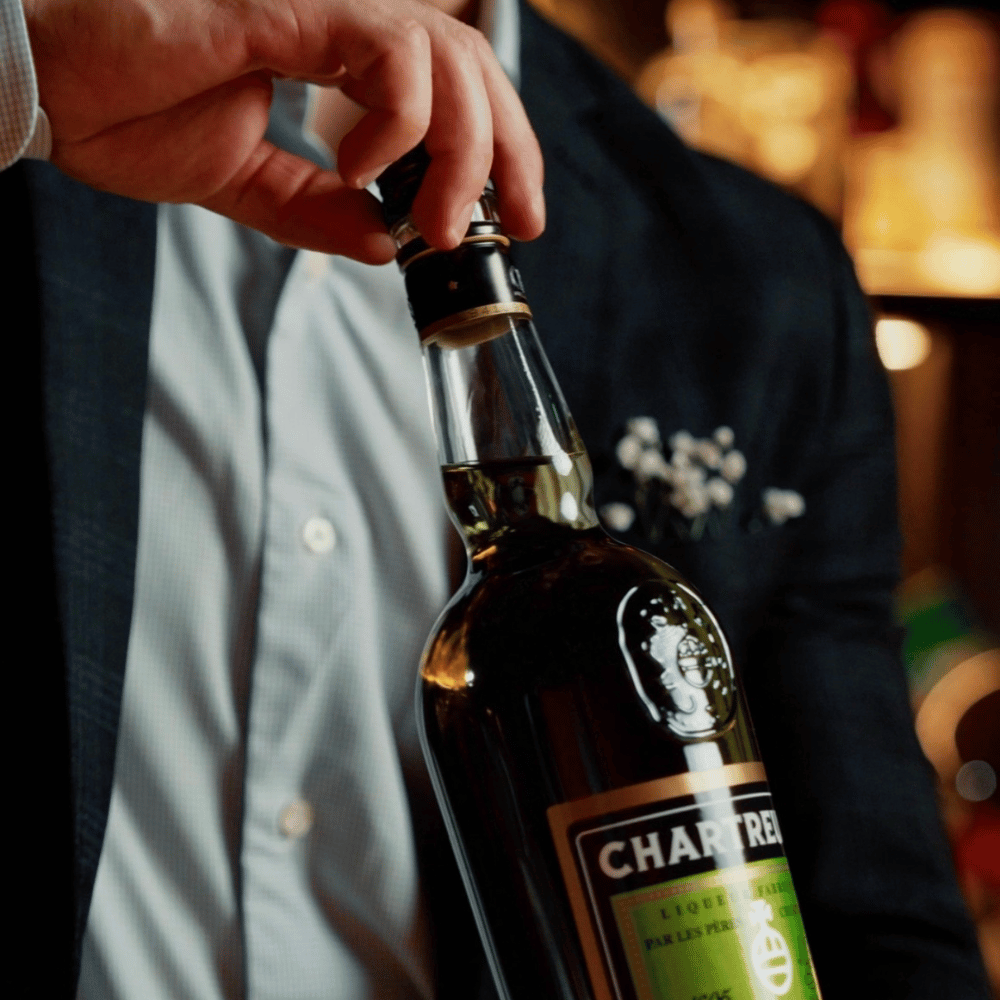
130 Secret Botanicals
Chartreuse uses 130 plants, herbs, flowers and botanicals. What almost nobody talks about is how ridiculous that number actually is from a production standpoint. Most herbal liqueurs rely on a handful of dominant ingredients. Chartreuse behaves differently. It evolves in layers. First you get mint. Then eucalyptus. Then alpine herbs. Then pepper. Then anise. Then something medicinal. Then sweetness. Then bitterness. Then heat. It drinks like somebody liquified an entire mountain.
The recipe arrived in 1605 as a mysterious manuscript handed to the Carthusian monks by French marshal François-Annibal d’Estrées. The document supposedly contained instructions for an “Elixir of Long Life”. Problem was, the recipe was almost unreadable and absurdly complicated. For over a century, the monks kept refining it.
That part matters. Chartreuse wasn’t invented in one genius moment. It was slowly decoded through generations of monks experimenting with plants, distillation and medicine. The final formula only emerged in 1764 after decades of trial, error and obsessive refinement.
Imagine working on a recipe for over 150 years before deciding: “Yep, that’s the one.”
That level of patience feels almost illegal in today’s drinks industry.
One of the coolest things about Chartreuse is that its growth happened almost accidentally. The monks originally made it as medicine. Before bartenders mixed it into cocktails, people used it as a health tonic. During cholera outbreaks in the 1800s, locals genuinely believed it had restorative powers. Whether scientifically accurate or not, the reputation stuck. Even the distribution sounded medieval.
Monks reportedly transported bottles on donkeys through the Alps, hidden between sacks of hay (speaking of bootlegging).
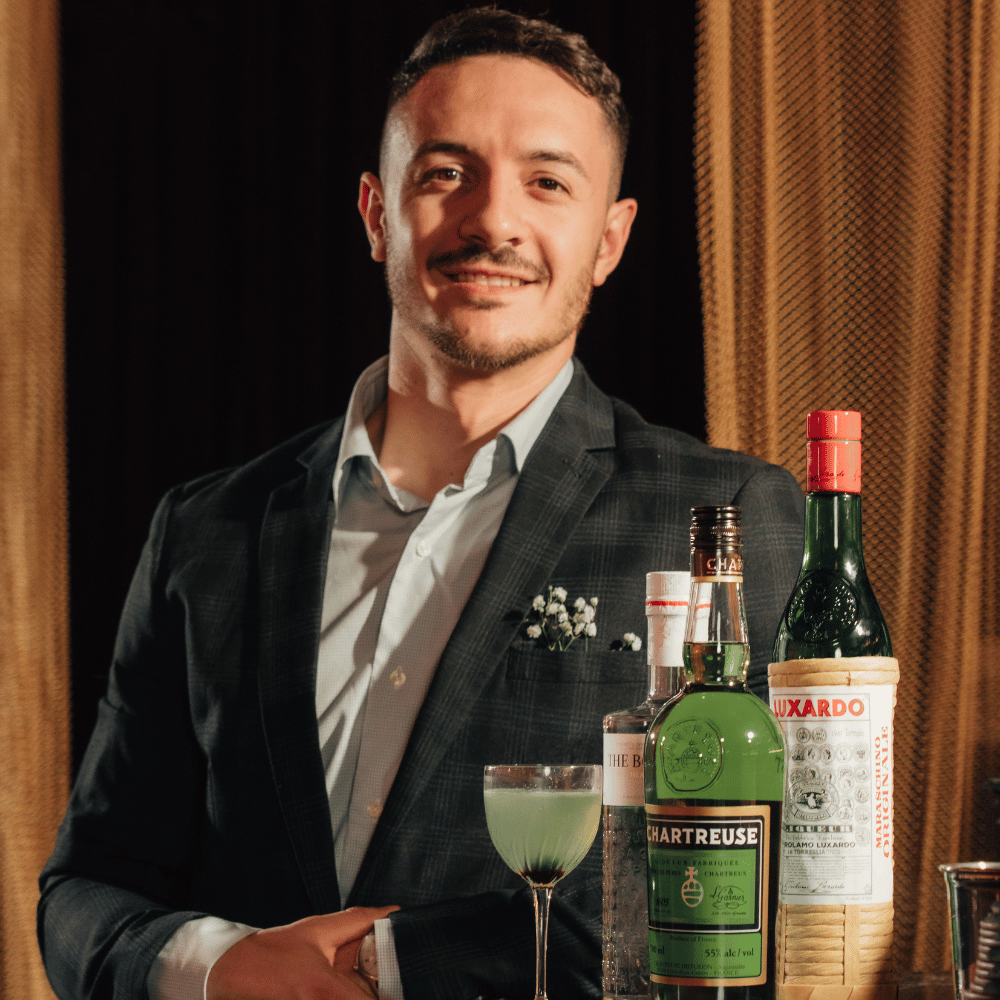
Storytelling
Meanwhile today brands spend millions trying to create “authentic storytelling”. Chartreuse literally has monks smuggling herbal elixir through mountain villages. You can’t out-brand that.
The irony is that the Carthusians never wanted commercial fame. They repeatedly got dragged into it by demand. Throughout history they faced fires, avalanches, political persecution, counterfeiters and expulsion from France itself.
At one stage, the French government seized the Chartreuse brand and handed production rights to another company. Consumers hated the fake version so much that American courts eventually banned it from import. That tells you everything. People weren’t loyal to the logo. They were loyal to the monks and the product itself.
The Colour So Unique They Named It After The Drink
Here’s a fun fact most people miss. Chartreuse is one of the very few spirits in the world to become its own recognised colour.
Not green. Not lime. Chartreuse.
That mystical green-yellow tone became so iconic that it entered design, fashion and art vocabulary permanently. The herbal liqueur became bigger than the category itself.
And the colour isn’t artificial either. That wild green in Green Chartreuse comes naturally from chlorophyll extracted during production.
Which honestly makes the whole thing even crazier considering the liquid looks like nuclear reactor coolant.
Yellow Chartreuse, meanwhile, tends to get overshadowed by its louder sibling but bartenders quietly adore it. Softer, honeyed, floral and less aggressive, it slides beautifully into cocktails without punching your palate in the face.
Green Chartreuse enters the room yelling. Yellow Chartreuse walks in wearing cashmere.
The Bartender Obsession
So, why do bartenders specifically love Chartreuse so much?
Simple. It behaves unlike almost any other spirit.
A tiny amount completely transforms a drink. Sometimes 15ml is enough to dominate an entire cocktail. It’s powerful, unpredictable and weirdly addictive to work with.
It also became a symbol of “industry taste”.
Liking Chartreuse almost functions as a hospitality rite of passage.
The first sip usually shocks you. The second confuses you. By the third you suddenly start craving it.
It’s the Fernet-Branca effect with better PR (and liquid).
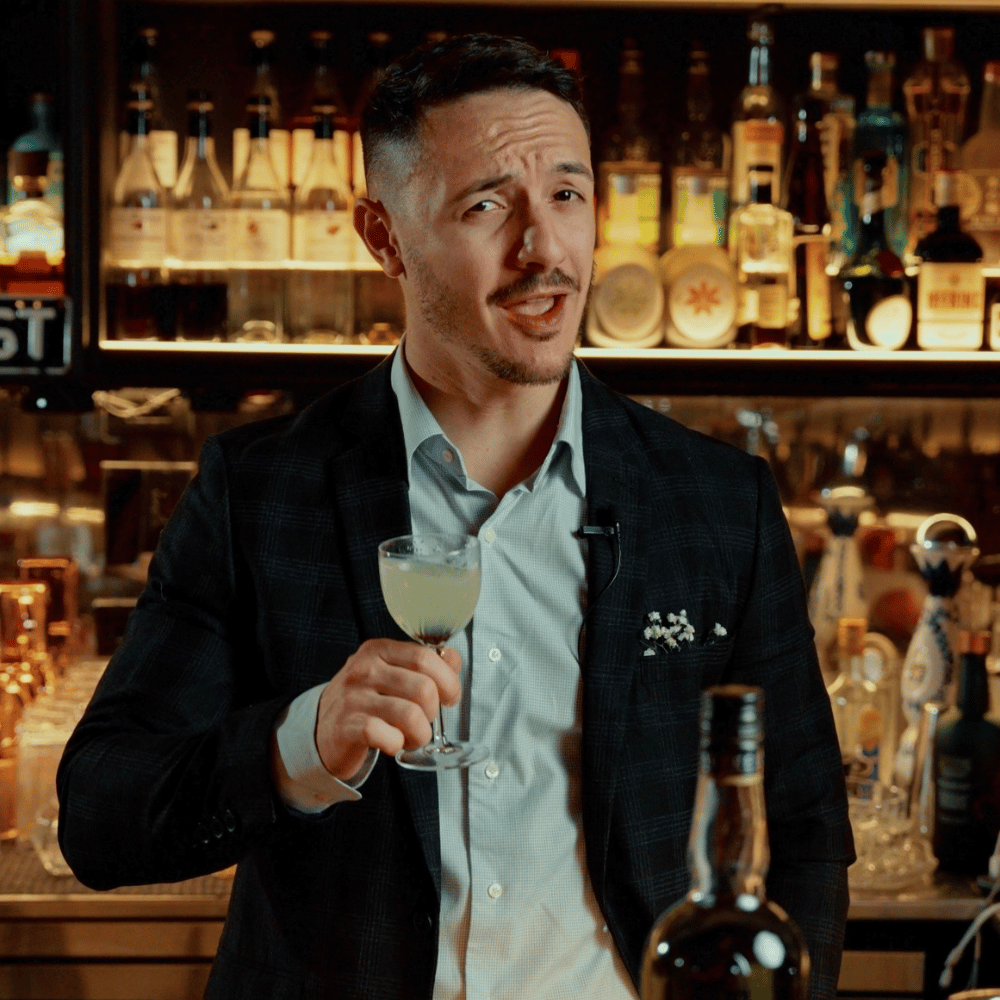
The modern cocktail revival.
As bartenders rediscovered forgotten classics in the early 2000s, Chartreuse exploded again globally.
Cocktail bars started treating it almost like liquid gold. Limited production only added fuel to the obsession. And unlike brands desperately trying to manufacture scarcity today, Chartreuse scarcity is very real.
The monks intentionally limit production to preserve their monastic lifestyle rather than maximise profits. Imagine explaining that concept to a modern liquor corporation.
“No, we actually don’t want infinite growth.”
Absolute insanity by modern standards.
The Last Word That Changed Everything
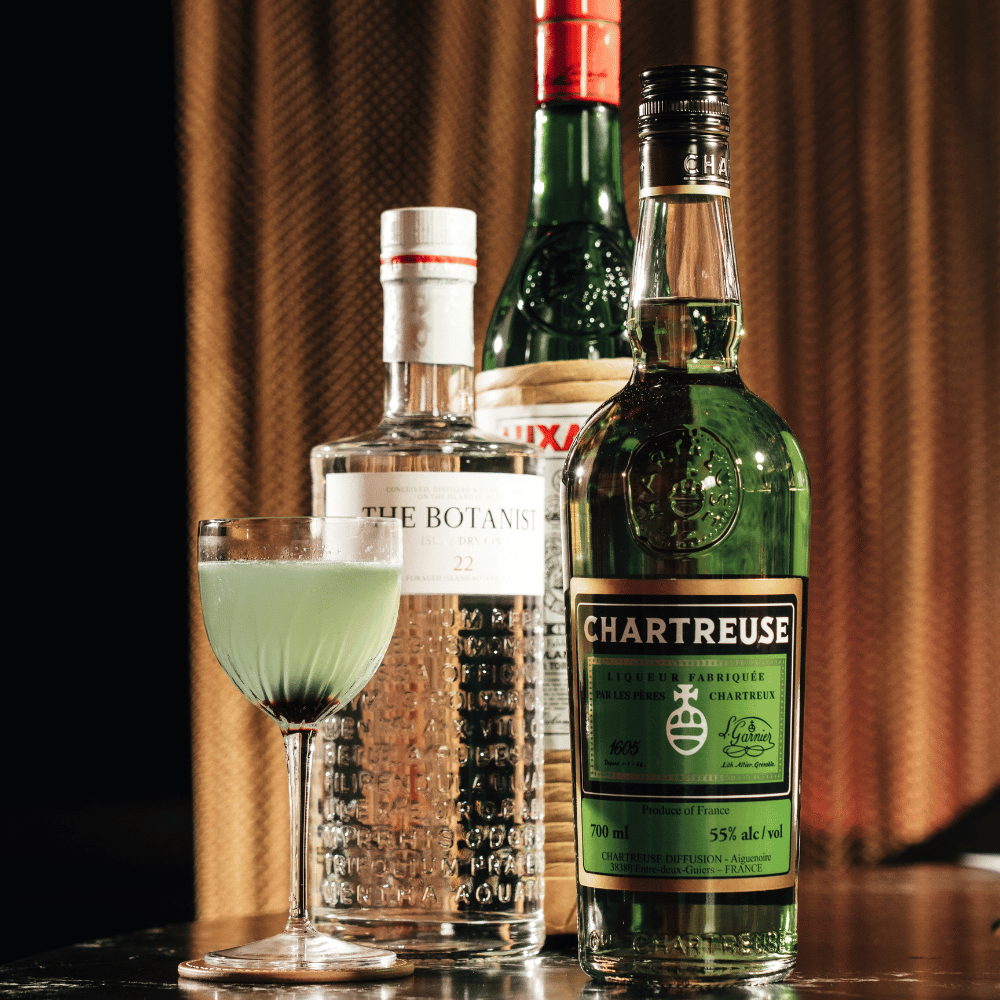
If there’s one cocktail responsible for introducing modern drinkers to Chartreuse again, it’s the Last Word. Created in the 1920s at the Detroit Athletic Club during Prohibition, the drink disappeared for decades before Seattle bartender Murray Stenson revived it in the early 2000s.
And thank god he did.
Equal parts gin, Green Chartreuse, maraschino liqueur and lime juice sounds chaotic on paper.
Yet, somehow it lands in perfect balance: herbal, sharp, sweet, citrusy and dangerously drinkable.
More importantly, it helped reintroduce Chartreuse to an entire generation of bartenders.
Without the Last Word, there’s a genuine chance Chartreuse stays a niche monk liqueur appreciated mainly by French grandfathers and hardcore spirits nerds. Instead, it became a modern cocktail essential.
The funny part? The drink still feels slightly unhinged.
Like all great Chartreuse cocktails, it walks the line between genius and complete madness. Which honestly feels very on-brand for the liqueur itself.
For a spirit surrounded by secrecy, monks, hidden manuscripts, wars, exiles and 400 years of obsession, its modern resurrection didn’t happen because of luxury marketing or celebrity endorsements. It happened because bartenders kept whispering about it to each other across the world.
And honestly, that feels poetic.
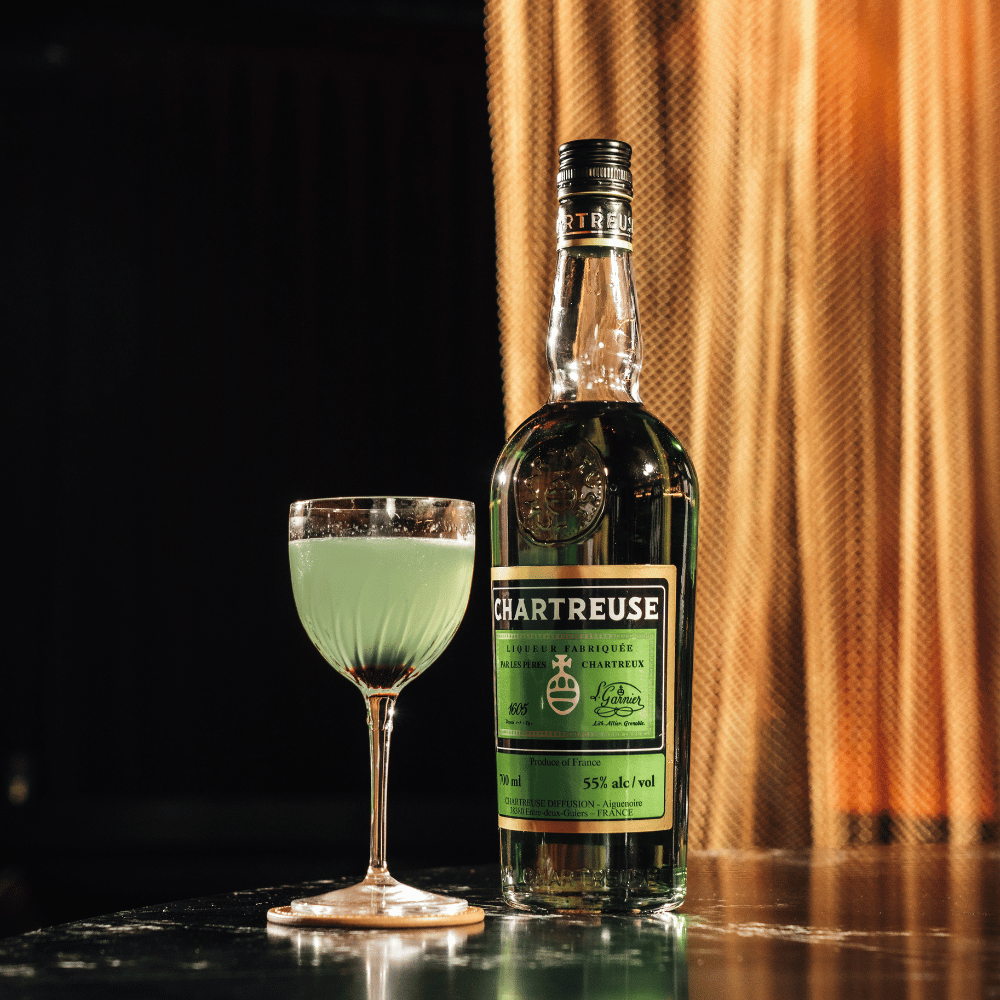
Final Ward Twist: When the Last Word Gets Darker
While the Last Word became the cocktail that dragged Chartreuse back into modern bars, bartenders being bartenders naturally couldn’t leave it alone for too long.
One of the most beautiful twists swaps gin for rye whiskey, pushing the drink into deeper, spicier territory.
The botanicals of Green Chartreuse suddenly wrap themselves around pepper, oak and dry spice rather than bright juniper, creating something moodier, richer and far more dangerous than the original.
Think of it as the Last Word after midnight. The herbal intensity remains, the maraschino still adds that strange nutty sweetness, and the lime keeps everything alive, but rye gives the cocktail weight. It feels less sharp and more seductive. Almost like the original version grew a beard and started listening to jazz on vinyl.
Some bars loosely connect this riff to the Final Ward, a modern classic created by Phil Ward, although the structure shifts slightly with lemon juice replacing lime. Either way, it proves the same point bartenders discovered decades ago: Chartreuse doesn’t just work in cocktails. It completely rewrites them.
Why You’ll Love This Recipe
The Last Word is one of those rare cocktails that feels both razor sharp and incredibly layered at the same time. Bright lime acidity cuts through the rich herbal intensity of Green Chartreuse, while maraschino liqueur adds subtle cherry and nutty notes that round out the structure without becoming overly sweet. The gin brings dryness and botanical lift, creating a cocktail that is fresh, complex, and slightly savoury on the finish.
It works beautifully as an aperitif thanks to its citrus driven profile and herbal bitterness, but the Chartreuse also gives it a digestif quality, making it surprisingly versatile across an evening. Perfect before dinner, late night after a big meal, or for those “one more drink” moments with bartender friends.
Food wise, it pairs incredibly well with salty and fatty dishes such as charcuterie, aged cheeses, oysters, fried snacks, or even rich Japanese flavours like karaage and yakitori.
Now it’s your turn to give this a try!
Share your questions, pictures, and tags on social media. You can find the video of this creation on our page. If you enjoy our content, please leave a like and follow us for more.
Let us know what you’d like to see in the next recipe!